
Treatments
Implants and Oral Surgery


Implants and Oral Surgery
Implants and Oral Surgery

TMJ and Teeth Grinding
Bruxism / Teeth Clenching and Grinding
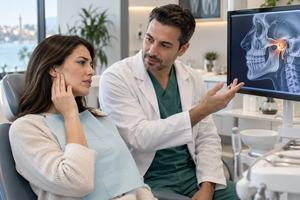
Bruxism is repetitive jaw-muscle activity involving clenching or grinding the teeth, or bracing the jaw in one position. There are two types: during sleep and while awake. An international expert consensus states that in otherwise healthy people bruxism is a behaviour rather than a disorder in itself, but that it should be assessed because of consequences such as tooth wear, broken restorations and jaw-muscle pain. The aim of management is to protect the teeth, address triggering factors and work with other specialties when needed.
Learn more →

Tooth Appearance and Restorative Treatments
Composite Bonding
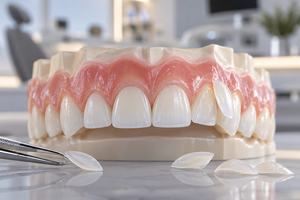
Composite bonding is a restoration in which a tooth-coloured resin material is bonded directly to the tooth and shaped. Small chips, gaps and shape defects can often be corrected in a single session, with no or very little drilling of the tooth. It is durable but can stain more over time than porcelain and needs regular maintenance.
Learn more →

Tooth Appearance and Restorative Treatments
Tooth Appearance and Restorative Treatments


Orthodontics and Clear Aligners


Tooth and Gum Health
Tooth and Gum Health
Tooth and Gum Health

Tooth and Gum Health
Paediatric Dentistry

Digital Diagnosis and Planning
Dental Radiology / CBCT
In dentistry, X-rays are used to assess areas that cannot be seen during an examination: between the teeth, the roots and the jawbone. The radiation dose of dental X-rays is low: a panoramic X-ray corresponds to roughly half a day to 4 days of the natural background radiation we receive every day. Even so, every X-ray should have a justification, and the type of imaging should be chosen according to the clinical question.
Learn more →
Digital Dentistry
Digital dentistry is the use of digital data in the impression, planning, design and follow-up stages of treatment. Intraoral scanners work with light, involve no radiation and are more comfortable than conventional impression material for many patients. Technology does not replace the clinical examination; used correctly, it strengthens record-keeping, communication and planning.
Learn more →