
Implants and Oral Surgery
Oral and Maxillofacial Surgery
Oral and maxillofacial surgery is the specialty that diagnoses and treats surgical conditions of the teeth, jaws, oral soft tissues and related structures. Many procedures inside the mouth can be done safely under local anaesthetic in a clinic setting. Safety starts with planning: imaging, medical history and current medications are reviewed in detail before any procedure.
Medical review: Taylan Akca, DDS, PhD — Oral and Maxillofacial Surgeon. Last updated: Nov. 15, 2026.
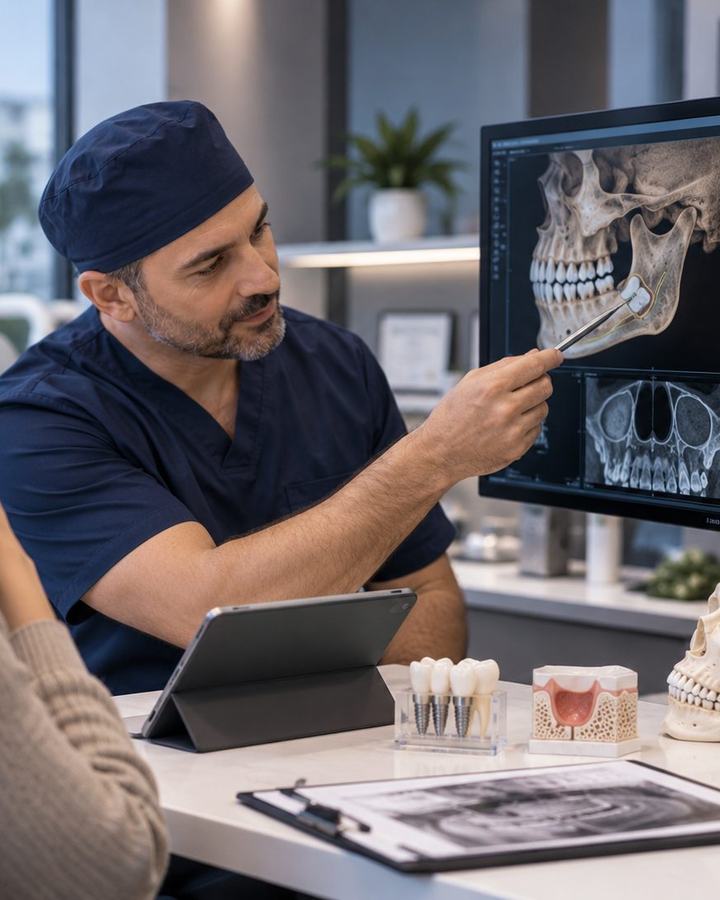
What we assess and treat
- Dental implant surgery
- Wisdom teeth and impacted teeth
- Bone grafting and sinus lift
- Difficult extractions and removal of retained roots
- Jaw cysts and oral lesions, including biopsy when needed
- Pre-prosthetic surgery
- Root-end surgery (apicectomy)
- Jaw joint and chewing muscle complaints
Procedures that need general anaesthesia or a hospital setting are referred to an appropriate centre.
Which changes in the mouth should be checked?
- A mouth ulcer that has not healed within two weeks
- White or red patches inside the mouth
- A new lump or firm area in the mouth, tongue or neck
- Unexplained tooth mobility or an extraction site that does not heal
- Numbness of the lip, tongue or chin
Most of these have harmless causes, but early diagnosis matters. Tobacco and alcohol use increase the risk of oral cancer.
How do we assess you before surgery?
- Medical history. Long-term conditions, previous operations, allergies and pregnancy.
- Medications. Blood thinners, bone-strengthening drugs (antiresorptives), immunosuppressants and diabetes treatment are especially important.
- Imaging. A panoramic X-ray and, when needed, a 3D CBCT scan to see the relationship with nerves, sinuses and neighbouring teeth.
- Information and consent. The aim of the procedure, alternatives, possible risks and recovery are discussed.
I take blood thinners. What should I do?
Do not stop blood thinners or other anticoagulant medicines on your own; stopping them can raise the risk of stroke or clots. Current guidance states that many simple oral procedures can be carried out without stopping these drugs, using local measures to control bleeding. When necessary, the decision is made together with the doctor who prescribes your medication.
What is recovery like?
- Bleeding usually settles within the first hours; bite on the gauze pad for 30–45 minutes.
- Swelling usually peaks on day 2–3 and then subsides. Cold packs help in the first 24 hours.
- Avoid spitting, drinking through a straw and smoking in the first days, as they can disturb the blood clot.
- Choose soft, lukewarm foods and keep your mouth clean as advised.
- Contact the clinic straight away if pain increases, bleeding does not stop, you develop a high fever, difficulty swallowing or breathing, or new numbness.
See our post-operative care guide for detailed advice.
Frequently asked questions
Is surgery done under local anaesthetic?
Many oral surgical procedures can be done under local anaesthetic. Sedation can be considered when needed; general anaesthesia for extensive procedures is planned in a hospital setting.
Will I need antibiotics afterwards?
Not for every procedure. The decision depends on the type of procedure, whether infection is present and your health. Unnecessary antibiotics contribute to resistance.
How much time off work will I need?
After simple procedures most people return to daily activities the next day. After impacted teeth or bone grafts, 1–3 days of rest may be advised.
I take osteoporosis medication. Can I have a tooth removed?
Yes, but the type of drug, how long you have taken it and how it is given (by mouth or into a vein) are assessed. Rarely, these drugs can cause healing problems in the jawbone; the risk and precautions are discussed beforehand.
I have a sore in my mouth that won't heal. What should I do?
Any sore lasting more than two weeks should be examined. If needed, a small tissue sample (biopsy) is taken for a definite diagnosis.
References
- Ruggiero SL, Dodson TB, Aghaloo T et al. AAOMS position paper on medication-related osteonecrosis of the jaws — 2022 update. J Oral Maxillofac Surg. 2022;80(5):920–943. doi:10.1016/j.joms.2022.02.008
- Scottish Dental Clinical Effectiveness Programme (SDCEP). Management of dental patients taking anticoagulants or antiplatelet drugs. sdcep.org.uk
Treatment duration
Simple surgical procedures usually take 30–60 minutes; more extensive ones such as impacted teeth or bone grafts can take longer. Soft tissues usually heal within 1–2 weeks, while bone healing takes months. Stitches either dissolve or are removed within 7–14 days.
Who may not be suitable
Suitability is decided after an individual examination. Uncontrolled diabetes or blood pressure, a recent heart attack or stroke, blood disorders, intravenous bone-strengthening medication, previous radiotherapy to the head and neck, and ongoing chemotherapy can change the timing and method of treatment. Non-urgent surgery is usually postponed during pregnancy.