
Tooth Appearance and Restorative Treatments
Porcelain Laminate / Laminate Veneers
A porcelain laminate is a thin ceramic restoration bonded to the visible surface of the front teeth. A laminate is not required for every change in appearance; bonding, orthodontics, whitening or doing nothing may also be options.
Medical review: Dr. Taylan Akça. Last updated: Aug. 29, 2026.
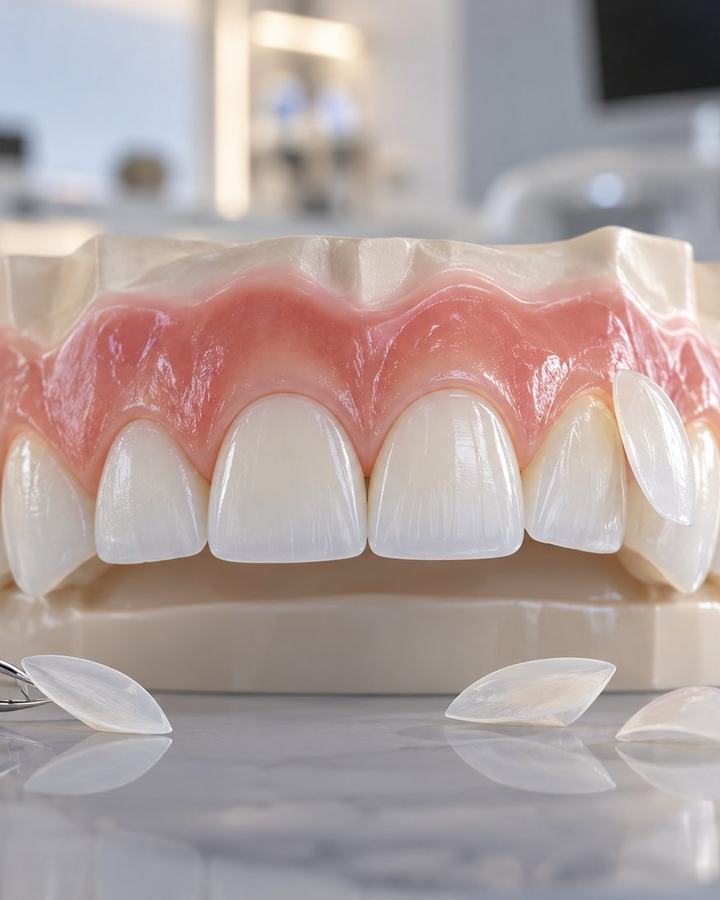
Is the tooth reduced?
The amount of preparation varies with the current position of the tooth, any colour change and the target form. In some cases very minimal preparation is possible, while in some cases more adjustment is needed. A "no-preparation laminate" should not make the tooth look thicker than necessary or impair cleansability.
Digital planning
The planned change can be assessed in advance with photographs, a digital scan and, where needed, a wax-up/mock-up. This process helps the patient's expectations and what is clinically achievable to be discussed on common ground.
If there is bruxism
Active teeth clenching and high forces can increase the risk of laminate restorations fracturing or debonding. A bruxism and bite assessment should be carried out first, and a suitable protection plan established.
Frequently asked questions
How long does a laminate last?
Its lifespan depends on many factors such as the tooth tissue, the bonding conditions, the bite, bruxism, care and trauma; it is not appropriate to give a fixed lifespan guarantee.
Laminate or zirconia?
A laminate can be a more conservative restoration that mostly covers the front surface of the tooth; a crown encircles the tooth more widely. The existing tissue loss and needs of the tooth determine the choice.
Do laminates discolour?
Porcelain surfaces are more resistant to discolouration than composite; however, the bonding margins, the neighbouring teeth and oral hygiene can affect the appearance.
If a laminate fractures, can it be repaired?
Small surface defects can sometimes be repaired with composite; with a marked fracture or crack the restoration may need to be replaced.
Is the tooth nerve removed for a laminate?
The aim of routine laminate treatment is not to carry out root canal treatment. The preparation and the current condition of the tooth can affect the need for endodontics; however, this is not a standard step.
Treatment duration
The process includes planning with photographs and a digital scan, a wax-up/mock-up where needed, preparation, a temporary restoration and the bonding stages; the total time varies with the case and the laboratory workflow.
When it may not be suitable
Active teeth clenching and high forces can increase the risk of laminate restorations fracturing or debonding. A bruxism and bite assessment should be carried out first, and a suitable protection plan established. A "no-preparation laminate" is not an ideal goal for every patient.